A very successful independent grocer once told me that what helps drive sales at his store was the fact that they were always “shoving food into shoppers’ mouths.” He was a huge proponent of demos – after all, there is no better way to drive trial of a food brand than by actually having people taste its products. So he teamed up with different brands each day, as well as with local farmers, and hosted demos.
At ECRM’s recent Winter Snack Session, I ran into Simone Luke, Head of Sales for North America at RangeMe Premium & Verified subscriber Pirucream – a brand that has spent the past five years expanding its Venezuelan rolled wafers into the U.S. market – and learned that she was planning to scale up its demo strategy from 250 events in 2025 to more than 500 this year.
During our video interview (see below), Luke unpacks some of the best practices she has learned from hosting all of those demos, and shares insights on how brands can get the most out of their demos. Here is some of what I learned.
Quality is the catalyst for tasting
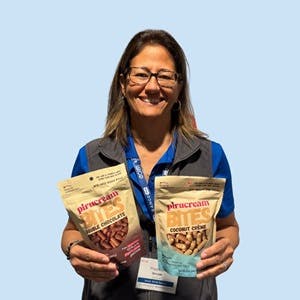
Before you book a demo, first things first: Your product must be ready for the spotlight. Pirucream differentiates itself by shaking up the traditional rolled wafer category with a bite-sized format and premium ingredients like 100% cocoa and hazelnuts sourced from Spain.
According to Luke, the demo is the only way to bridge the gap between quality and consumer awareness. “We pride ourselves on premium ingredients.” says Luke. “We bring in hazelnuts from Spain, and the quality sets us apart. The best way for the consumers to know that is to taste it and that’s why demos are critical.”
Demos require close coordination with the retailer
As demos can be highly regulated in some retailers it’s important that the demo team – whether it’s your own or outsourced – has a strong relationship with them. The retailer and the store layout dictates when, where and how you can do the demo.
“They’ll provide a framework under which you will do a demo,” says Luke. “Usually we have them take the product that is already at the location. It takes about 30 minutes for the demo team to set up. We provide actual demo stands that are Pirucream branded whenever possible, and the manager on site that day will show them their area within the store. Sometimes it’s not close to where your product is actually selling on the shelf, but ideally it is.”
Pirucream targets prime shopping times for its demos, which typically means four- to five-hour windows on weekends.
The personality of the demonstrator is key
Having a good location in the store and impactful signage is important, but equally important is the person at the table. You want to have someone with a lot of energy and an engaging personality to encourage shoppers to stop and sample the products.
“You want to work with a demo service that has staff who are engaging and motivated to stop someone and say, ‘Don’t just walk by, hey, come and have a taste,’” says Luke. “That’s ultimately the goal. Once we feel someone has had one Pirucream bite, they’re going to want more.”
As someone who has personally tried one of Pirucream’s samples at the ECRM Session, I can tell you that they are VERY addictive!
Creating a “virtuous cycle” of content
One of the most effective ways to maximize your ROI with demos is to tap into content before, during and after the event. Pirucream layers their demos with other marketing efforts to hit the consumer from multiple directions. This includes:
- Retailer promotions: Coordinating demos with active store and social media promotions to drive people to the demo table.
- Influencer integration: Bringing in local influencers to create social media content during the live event as well as to use afterward.
- Staff engagement: Prior to the demo, make sure to distribute samples to store employees so they can “talk up” the product and direct traffic to the demo area.
“If the retailer has a promotion and you’ve got the demo going on,” that’s a powerful combination,” says Luke. “Then the added element that we’d like to do is send in an influencer at that time so you can create some content for your social media campaigns.”
Demos don’t have to just be in stores
Product demos aren’t limited to store locations. The main thing is that they need to ultimately drive consumers into a store (or online) to purchase the products. Pirucream, for example, is a sponsor of the Texas Book Festival in Austin, where last year they handed out 5,000 samples to attendees.
“We were about to launch at a major retailer in Texas,” says Luke. “Obviously, books are important from an enjoyment, leisure and education perspective. Lots of kids were there, and kids love Pirucream and if you give that one taste to a young child and they spot our products walking through the store with mom, that really is a big sell for us too.”
For demos outside of retail locations, it helps to have a tool that can help people find the stores where the products are available. Pirucream recently launched a store locator on its website so that consumers can find every store in the U.S. that sells its various products.
Advice for emerging brands: The ‘Founder’ demo
For young brands just starting out, the best demo representative might already be sitting in the C-suite. Luke advocates for “founder demos” as a way to gain unfiltered market research that third-party agencies simply can’t provide.
“A founder or a brand owner getting that feedback directly from consumers at that point of taste is critical for young brands,” says Luke. “So for new brands, I would engage in the demo myself as the founder.”
Regardless of how you do it, demos should be a key part of any emerging food brand’s marketing arsenal. If your product is really that good, then you can’t go wrong stuffing it into people’s mouths!